Buying a Home Remains 35% Less Expensive than Renting!
In the latest Rent vs. Buy Report from Trulia, they explained that homeownership remains cheaper than renting with a traditional 30-year fixed rate mortgage throughout the 100 largest metro areas in the United States.
The updated numbers actually show that the range is from an average of 16% in Honolulu (HI), all the way to 55% in Sarasota (FL), and 35% Nationwide!
The other interesting findings in the report include:
Interest rates have remained low and even though home prices have appreciated around the country, they haven’t greatly outpaced rental appreciation. “In the past year, these two trends have made homeownership even more affordable compared with renting.”
Some markets might tip in favor of renting if home prices increase at a greater rate than rents and if – as most economists expect – mortgage rates rise, due to the strengthening economy.
Nationally, rates would have to rise to 10.6% for renting to be cheaper than buying – and rates haven’t been that high since 1989.
Bottom Line
Buying a home makes sense socially and financially. Rents are predicted to increase substantially in the next year, lock in your housing cost with a mortgage payment now.
Thinking of Buying a Home? Ask Yourself These 3 Questions!
Brought to you by the smart guys at KCM crew.
If you are debating purchasing a home right now, you are surely getting a lot of advice. Though your friends and family will have your best interest at heart, they may not be fully aware of your needs and what is currently happening in real estate.
Let’s look at whether or not now is actually a good time for you to buy a home.
There are 3 questions you should ask before purchasing in today’s market:
1. Why am I buying a home in the first place?
This truly is the most important question to answer. Forget the finances for a minute. Why did you even begin to consider purchasing a home? For most, the reason has nothing to do with finances.
A study by the Joint Center for Housing Studies at Harvard University reveals that the four major reasons people buy a home have nothing to do with money:
A good place to raise children and for them to get a good education
A place where you and your family feel safe
More space for you and your family
Control of that space
What non-financial benefits will you and your family derive from owning a home? The answer to that question should be the biggest reason you decide to purchase or not.
2. Where are home values headed?
When looking at future housing values, Home Price Expectation Survey provides a fair assessment. Every quarter, Pulsenomics surveys a nationwide panel of over 100 economists, real estate experts and investment & market strategists about where prices are headed over the next five years. They then average the projections of all 100+ experts into a single number.
Here is what the experts projected in the latest survey:
Home values will appreciate by 4.1% in 2015.
The cumulative appreciation will be 18.1% by 2019.
Even the experts making up the most bearish quartile of the survey still are projecting a cumulative appreciation of over 10.5% by 2019.
So what does that really mean for you and your family?
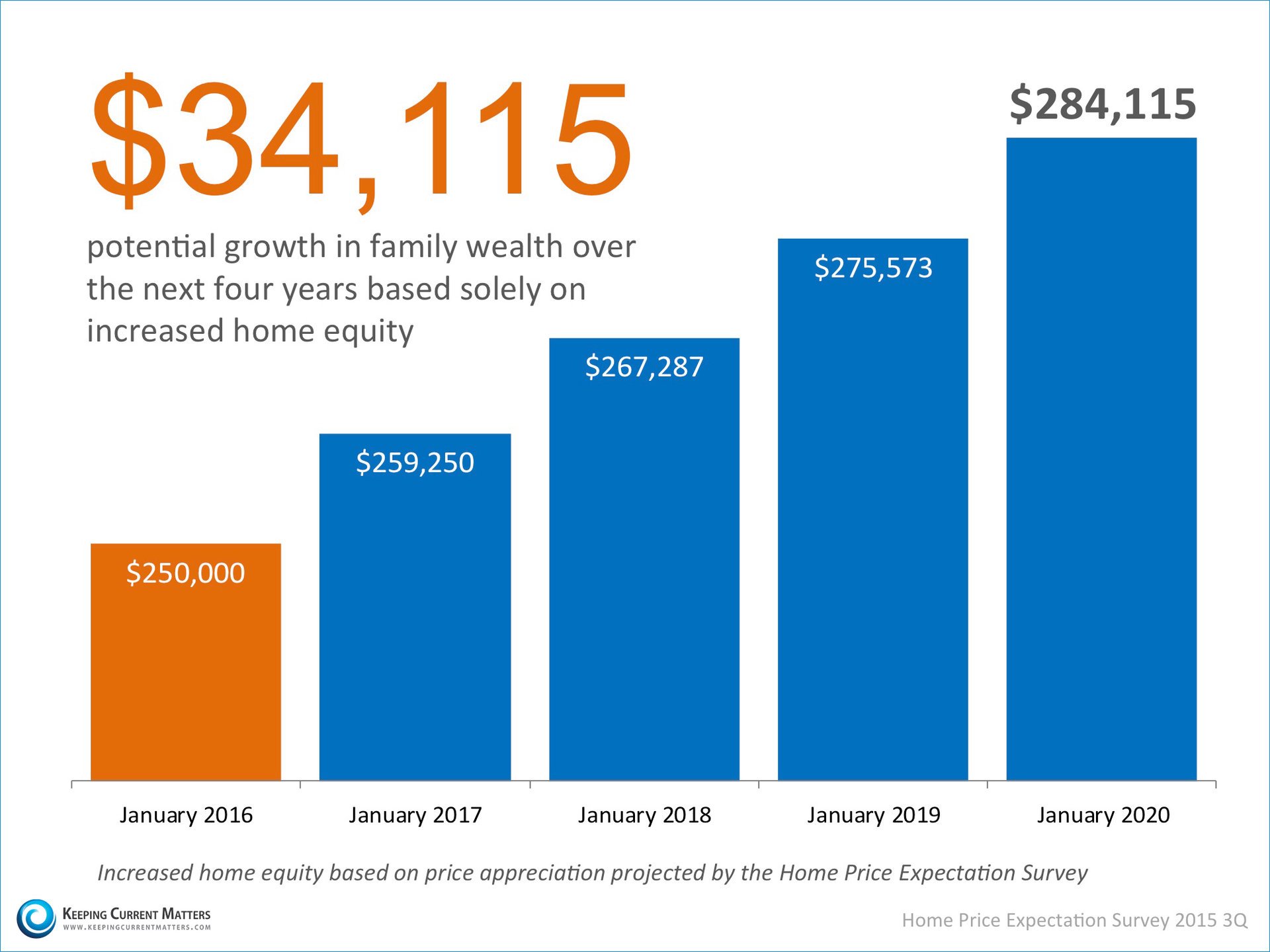
The chart below was made using the Home Price Expectation Survey’s predictions:
If the experts are right and you were to purchase a home by January 2016 for $250,000, that home would appreciate by over $34,000 over the next four years! As we have reported before, homeownership is one of the best ways to build your family’s wealth.
3. Where are mortgage interest rates headed?
A buyer must be concerned about more than just prices. The ‘long term cost’ of a home can be dramatically impacted by an increase in mortgage rates.
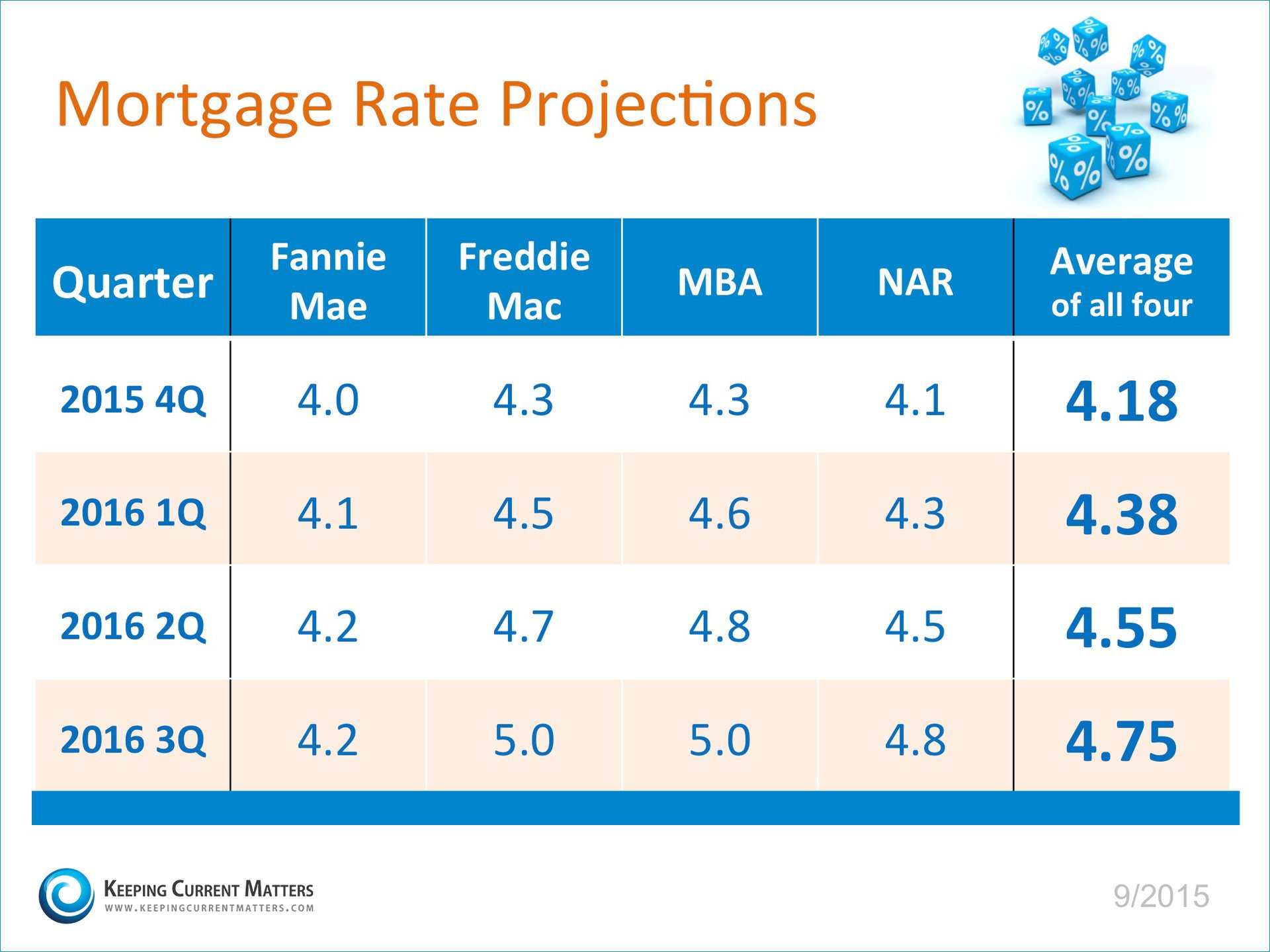
The Mortgage Bankers Association (MBA), the National Association of Realtors and Freddie Mac have all projected that mortgage interest rates will increase by approximately one full percentage over the next twelve months as you can see in the chart below:
Bottom Line
Only you and your family will know for certain if now is the right time to purchase a home. Answering these questions will help you make that decision.
The fact that residential home prices are increasing substantially in most regions of the country is music to the ears of homeowners. However, if you are in the process of selling your home, make sure you realize the major challenge a hot real estate market creates.
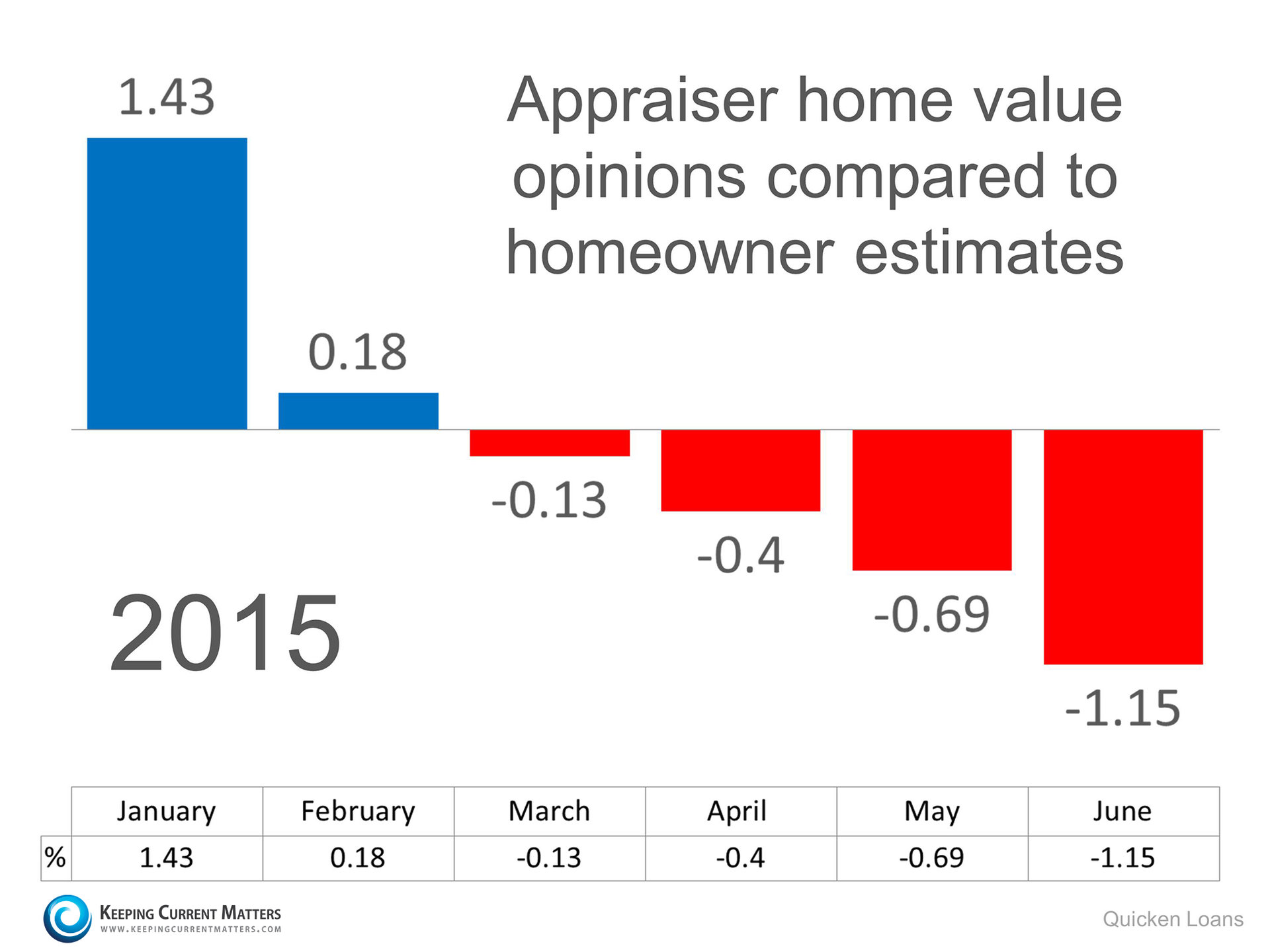
Each house must be sold twice; once to a buyer and a second time to an appraiser who represents the bank that will grant the purchaser a mortgage to buy the home (unless it is an “all cash” purchase). In a real market with escalating prices, the second sale may be the more difficult. And a recent survey by Quicken Loans reveals that the gap between what a homeowner believes is the value of their home compared to an appraiser is widening.
This could lead to an increase in the percentage of real estate transactions being challenged by a ‘short’ appraisal (where the appraiser value is less than the contracted price of the home).
Bottom Line
Whether you are a buyer or a seller, you must be prepared for this possibility as it may result in a renegotiation of the price of the home.
The spring and summer months have always been known as a very popular time for homebuyers to start the search for their dream home. This year is no different!
We all learned in school that when selling anything, you will get the most money if the demand for that item is high and the inventory of that item is low. It is the well-known Theory of Supply & Demand.
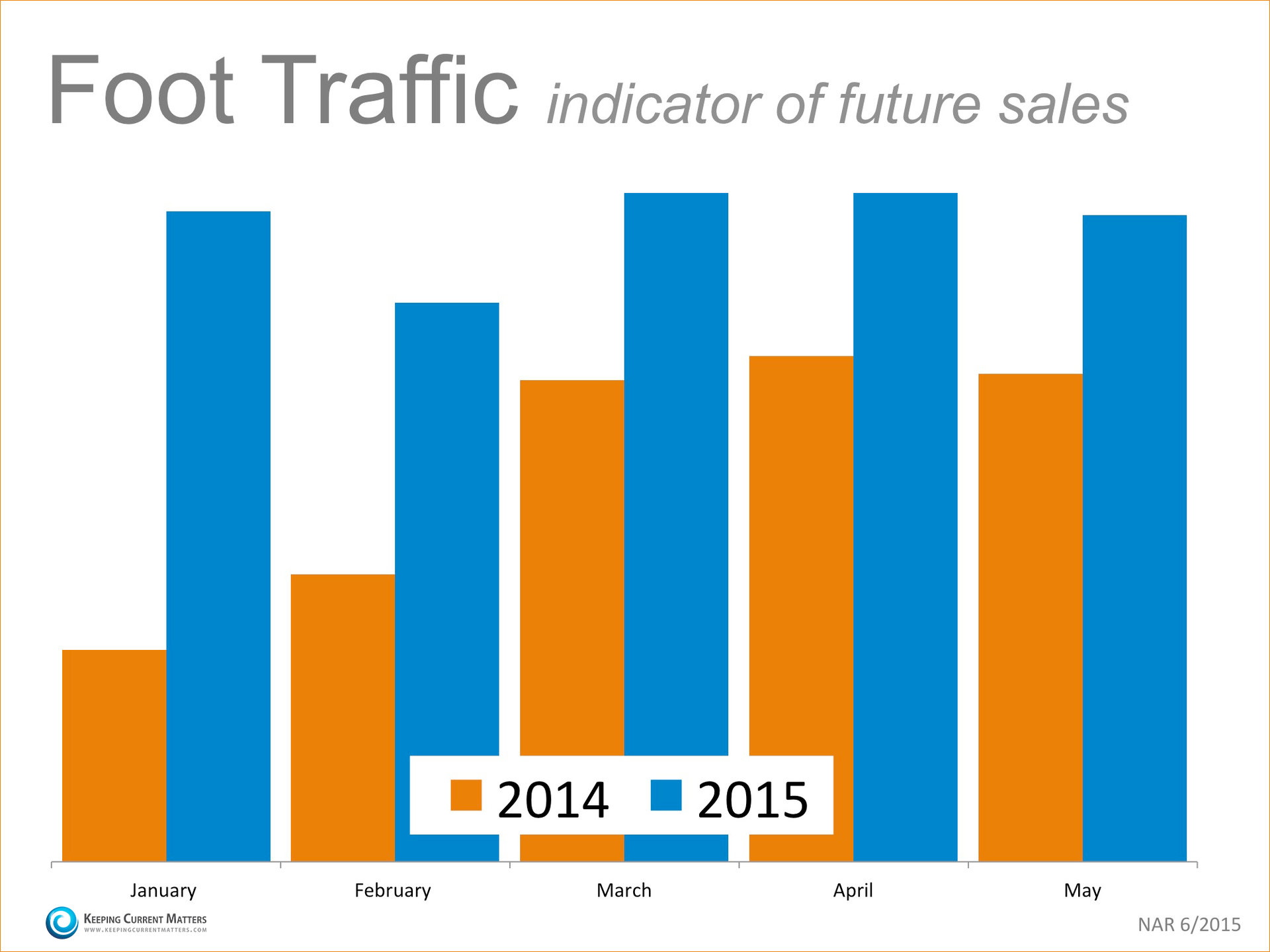
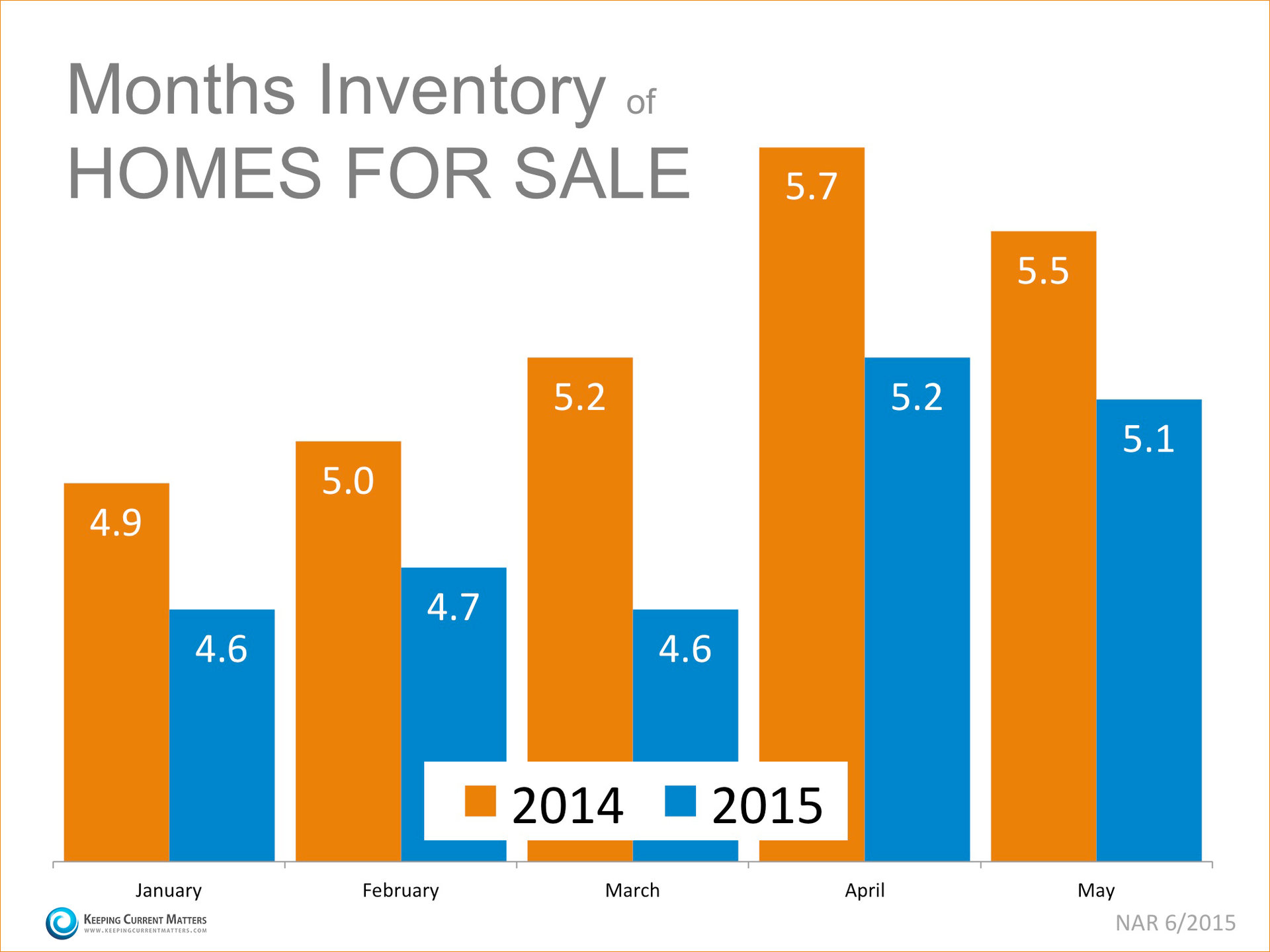
If you are thinking of selling your home, here are two graphs that strongly suggest that the time is now. Here is why…
DEMAND
According to research at the National Association of Realtors (NAR), buyer activity this year has far outpaced the same months in 2014. Purchasers who are ready, willing and able to buy are in the market at great numbers.
According to NAR, “Foot Traffic has a strong correlation with future contracts and home sales, so it can be viewed as a peek ahead at sales trends two to three months into the future.”
SUPPLY
The most recent Existing Home Sales Report from NAR revealed that the current supply of housing inventory is at a 5.1 month supply, which remains below the 6-months necessary for a normal market.
Buyer demand is far outpacing the supply of homes available for sale.
Bottom Line
Listing your house for sale when demand is high and supply is low will guarantee the offers made will truly reflect the true value of your property.
SOURCE: KCM crew
Thursday, June 4, 2015
The #1 Reason to Buy Right Now – THE MONEY!!
People often ask whether they should buy a home now or wait. Recently released data suggests that waiting may not make sense as prices seem to again be on the rise. Let’s take a look at some of the data and commentary on the subject:
“The current tightness of supply conditions would normally be consistent with much faster price growth. The continued steady growth in home sales that we expect this year will only add to this upward pressure on prices.”
“The S&P/Case-Shiller U.S. National Home Price Index, covering all nine U.S. census divisions, recorded a 4.1% annual gain in March 2015 … with a 0.8% increase for the month.”
“All signs are pointing toward continued price appreciation throughout 2015…Tight inventories, job growth and the impact of demographics and household formation are pushing price levels in many states toward record levels.”
“Even without further acceleration, the pace of price growth remains too high. Strong buyer demand and low inventories coupled with relatively low new construction are helping to push prices up, keeping the housing market tipped in favor of sellers.”
"The first quarter saw strong and widespread home price growth throughout most of the country. Home prices are now, on average, roughly 20 percent above where they were three years ago. This run-up has been historically exceptional and is particularly notable in light of the limited household income growth and modest rate of overall inflation observed during that same time period."
Bottom Line
If you are planning on buying a home in the near future, waiting probably doesn’t make sense from a purely pricing standpoint.
![The Difference an Hour Can Make [INFOGRAPHIC] | Keeping Current Matters](http://www.keepingcurrentmatters.com/wp-content/uploads/2015/10/The-Difference-a-Hour-Makes.jpg)


![Where Will Home Prices Be Next Year? [INFOGRAPHIC] | Keeping Current Matters](http://www.keepingcurrentmatters.com/wp-content/uploads/2015/10/Home-Prices.jpg)